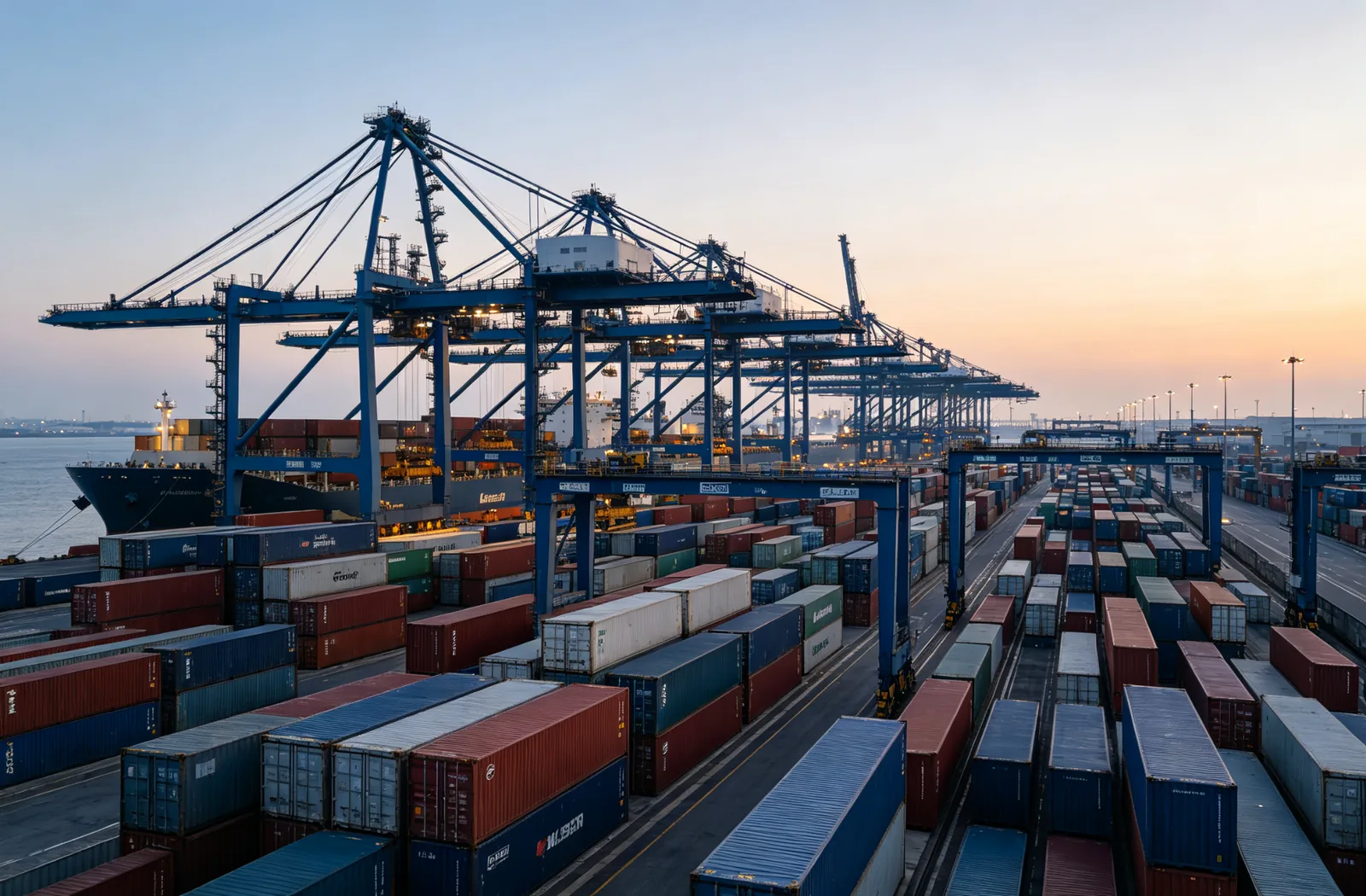
An exam notice rarely hurts because of the exam itself. It hurts because you do not know what is being checked, how long it takes — by ocean or by air — or who pays. Brokers answer "still waiting for release" while demurrage ticks. This note from our US customs clearance desk covers exam types, triggers, costs and control.
1. You Cannot Prevent Exams — Only Manage the Odds
CBP exam orders come from a risk score plus random selection. No forwarder can promise an exam-free container.
- Not controllable: random selection, enforcement priorities, port staffing, scanning queue.
- Controllable: description specificity, defensible value, stable HTS classification, certificates on file, importer-of-record history.
Risk scoring rewards data consistency: contradictions raise the score, so clean data usually clears faster.
2. Four Exam Types and What Each Costs You in Time
| Exam type | What CBP checks | Typical timeline | Devanned? |
|---|---|---|---|
| VACIS / X-Ray (non-intrusive) | Scanned for density anomalies or concealment | Usually fastest; per terminal queue | No, unless the image looks anomalous |
| CET / document review | Paperwork only: classification, value | Often several business days | No |
| Intensive Exam | Full devanning; piece-by-piece check of description, quantity, labels | Commonly one to several weeks, depending on scheduling | Yes, possibly the full load |
| MET / targeted exam | Commodity-specific screening (textiles, electronics) | Depends on the lab cycle | Per the order |
Non-intrusive and document exams are information checks; Intensive and targeted exams are physical checks. Only the latter bring devanning, re-loading and storage exposure.
3. What Sends a Container to the Exam Area
- Generic descriptions: "parts" or "accessories" with no material, function or model go to a human reviewer.
- Understated value: an invoice well below the market range is a classic review trigger.
- Inconsistent HTS codes: the same product coded differently by shipment, or a packing list that contradicts the invoice.
- Mixed loads: electronics, textiles and children's goods together multiply the rules in play.
- Missing certificates: where FDA, FCC, CPSC or DOT rules apply, the file is empty at sailing.
A broker's real value is clearing these five items before the container leaves the factory.
4. Who Pays for an Exam
Most disputes start here. Standard practice is that exam charges pass through at cost to the cargo owner, since an exam is a government action, not a service failure. Pass-through only works when every line is itemized, which is where our US customs clearance desk earns its keep.
| Charge | Where it arises | Usually borne by |
|---|---|---|
| NII / exam service fee | Terminal or exam site | Cargo owner, at cost |
| Devanning and re-loading labor | On-site work during an Intensive Exam | Cargo owner, per work performed |
| Exam drayage | Moving the box to the exam area and back | Cargo owner |
| Demurrage / storage | Container overstaying at the terminal | Cargo owner, per terminal tariff |
| Warehousing during the exam | Temporary storage after devanning | Cargo owner |
| Broker coordination | Appointments and document supplements | Often inside the service fee |
The argument is rarely about whether a charge is legitimate; it is about whether the breakdown can be explained.
⚠️ Note: the categories above reflect common practice. Actual items and rates follow the terminal's and the licensed customs broker's invoices for the period in question, and official regulations then in force. Ports differ significantly, so confirm settlement terms before you sign.
5. Five Moves That Lower Your Odds
- Describe goods to a classifiable level: material, function and model, not just "LED light".
- Certificates up front: file applicable test reports before sailing for submission on arrival.
- Declare value truthfully: keep contracts and payment records that explain the price.
- Keep data consistent: description, quantity and code must match across invoice, packing list, entry and ISF.
- Document the load: photos of marks, piece counts and the seal number are your best evidence.
Do these five and a selected container usually clears faster too.
6. After You Are Selected
- Identify the order type — non-intrusive, document or Intensive — before assuming devanning.
- Check the file for self-consistency: anything clarified on paper avoids a physical exam.
- Request the charge basis and schedule, so nothing is disputed later.
- Watch the demurrage clock: every day the box sits is a storage cost.
7. When This Logic Does Not Apply
- Random selection with a clean file: no lever to pull. Paid "priority, exam-free" handling does not exist.
- A flagged history: repair takes several compliant shipments; one clean entry resets nothing.
- Certificates that cannot be obtained: that is an admissibility question, not a probability one — screen it before booking.
FAQ
Q: Can US customs exams be avoided? A: No. Random selection and enforcement priorities sit outside a forwarder's control, so "we never get examined" is not credible. Clean data lowers the odds and speeds handling.
Q: How long does an X-Ray exam take? A: Non-intrusive exams are usually faster, but timing depends on the terminal queue and daily volume. We give milestones, not fixed day counts.
Q: Does an Intensive Exam always mean full devanning? A: In most cases CBP requires devanning for verification; the workload depends on how cargo was loaded. Clear marks and tidy loading re-load faster.
Q: Under DDP, are exam charges still billed separately? A: It depends on the contract. The honest approach keeps duty and routine clearance inside the quoted rate, while terminal, devanning and demurrage costs that actually occur are itemized.
Q: How do I judge whether a forwarder handles exams well? A: Three tests: can they name the order type, produce a charge breakdown, and give milestones. A broker who only says "it is still being examined" has no on-site capability.
Talk to Us Before You Book
Exams are not controllable, but declaration quality, document readiness and on-site handling are. Harmony Shipping Services Limited is a Dongguan, China-based forwarder with a US entity BOND, a licensed customs broker, and owned trucking plus rail delivery, handling China-to-US FCL ocean freight under DDP, with a team carrying 15+ years of US trade lane experience.
Send your product description, material, value and destination warehouse before booking, and we will flag classification, certification and exam-risk issues first. Regional coverage is city-wide; exam-risk pre-checks go to alan@hssddp.com.