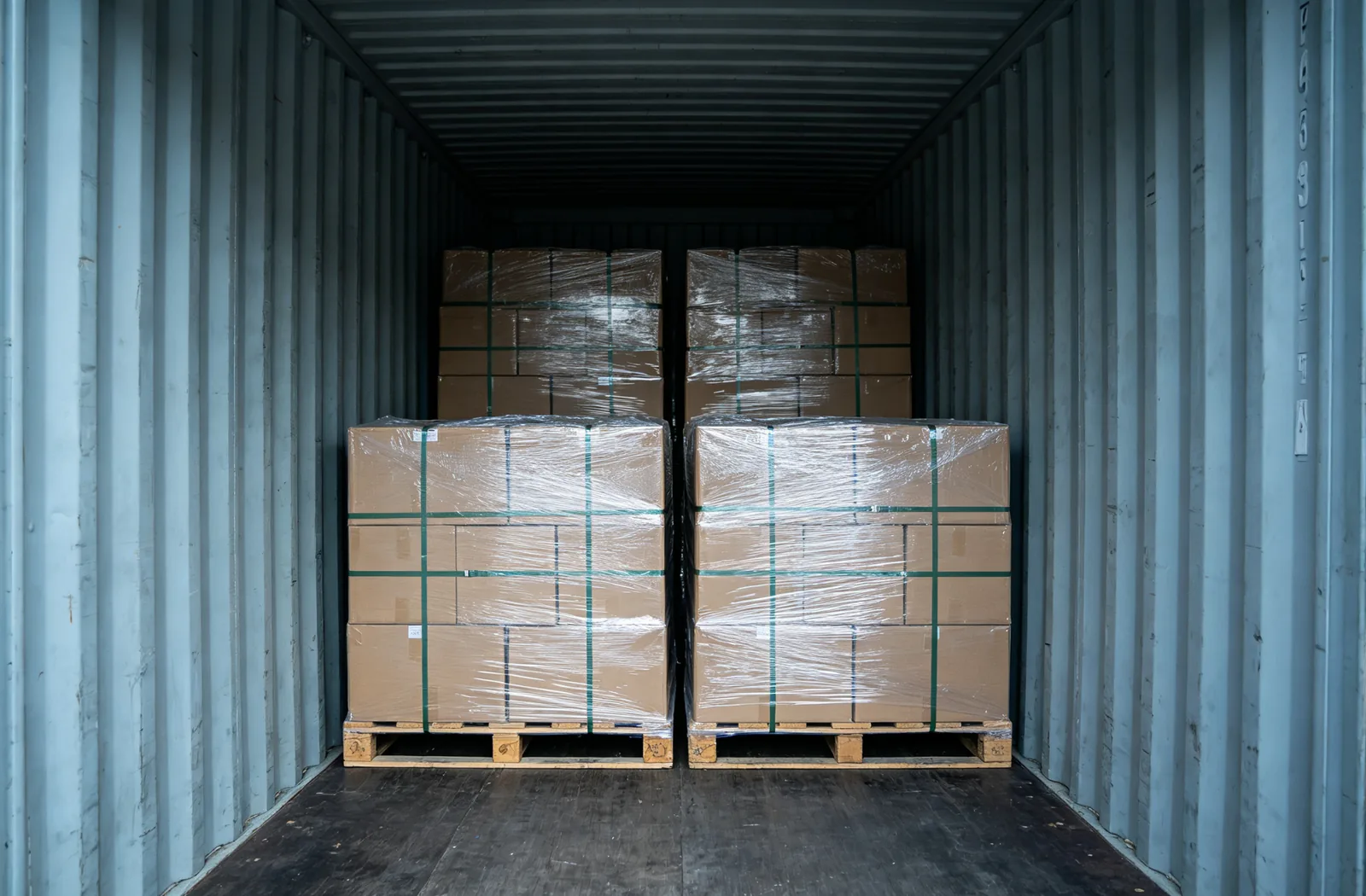
A quote says DDP, the buyer replies "what about DDU, is it cheaper" — this conversation happens daily. Yet a fair number of people using DDP for years still describe the difference incorrectly.
This article covers the terms and the contract clauses only, not the operating process.
1. DDP and DDU in one line
DDP (Delivered Duty Paid): the seller delivers to the named place and bears all costs and risks, including import clearance and import duty.
DDU (Delivered Duty Unpaid): the seller also delivers to the destination, but does not handle import clearance and does not pay import duty. The buyer does.
The only real difference is one sentence: who clears the import border and who pays for it.
| DDP | DDU | |
|---|---|---|
| Transport to destination | Seller | Seller |
| Export declaration | Seller | Seller |
| Import clearance | Seller | Buyer |
| Import duty | Seller | Buyer |
| Risk transfer | On delivery at destination | On delivery at destination |
One note: DDU was superseded by DAP (Delivered At Place) from Incoterms 2010 onward. Quotes still saying DDU are following trade habit; in substance it equals DAP.
2. Six terms in one table
| Term | Export declaration | Main freight | Import clearance | Import duty | Delivery point |
|---|---|---|---|---|---|
| EXW | Buyer | Buyer | Buyer | Buyer | Seller's premises |
| FOB | Seller | Buyer | Buyer | Buyer | On board, origin port |
| CPT | Seller | Seller | Buyer | Buyer | Named place |
| DAP | Seller | Seller | Buyer | Buyer | Destination, not unloaded |
| DDP | Seller | Seller | Seller | Seller | Destination, duty paid |
Read only two columns: import clearance and import duty. Moving one cell right from DAP to DDP flips both from buyer to seller. That is the whole difference.
3. Is DDP a mode of transport?
No. DDP is a trade term, not a mode of transport.
Sea, air, rail and truck can all run under DDP. The same DDP term can be a full container to the door, an air shipment to the door, or sea to the US West Coast plus inland rail. The mode decides how cargo moves; the term decides how money and responsibility are split.
Confusing the two leads to the wrong question. People ask "how much per kilo on DDP" — but DDP on a full container is priced per container. Only air freight and LCL are priced by weight or volume.
4. Is DDP the same as double clearance and duty paid?
In practice, a Chinese DDP quote is essentially double clearance with duty paid to the door, but the two phrases come from different places:
- DDP is an international trade term (Incoterms) defining the boundary between buyer and seller
- Double clearance, duty paid is Chinese forwarder shorthand for export declaration plus import clearance plus duty, all included
So when a buyer asks for double clearance and the forwarder says DDP, they mean the same thing. The difference is that DDP has an international definition and the Chinese phrase does not — the latter is trade slang, and exactly what it covers must be written into the contract line by line.
This is where most DDP disputes begin: both sides assume they agreed on the same scope, and they did not.
5. Three risks in DDP delivery terms
Risk 1: the seller cannot clear import without a local entity
DDP requires the seller to act as importer. Without a US entity, a bond and a licensed broker, the term cannot actually be performed. Many "DDP quotes" on the market are really a third party importing, which lengthens the chain of title and responsibility.
Risk 2: anti-dumping and countervailing duty is usually excluded
"Duty" in DDP normally means ordinary customs duty. Anti-dumping (AD) and countervailing duty (CVD) are typically quoted separately and must be confirmed either way. This matters most on wooden furniture, cabinets and quartz surfaces.
Risk 3: the term says DDP but the quote stops at the port
Nominally DDP, actually ocean freight plus export declaration only, with destination charges, clearance, duty and delivery all extra. The test is simple: ask for the five cost segments itemised. If they cannot list them, it is not DDP.
6. Five questions to ask before accepting a DDP quote
- Does duty include anti-dumping duty? Essential for wooden furniture, cabinets and quartz surfaces
- Are destination port charges included? If not, expect THC, document fees and pickup costs on arrival
- Is delivery to a door or a warehouse? Amazon FBA, commercial and residential addresses are priced differently
- Who is the importer of record? Whose bond is used, and who is liable if something goes wrong — name it in the contract
- Where is risk transferred? Under DDP it transfers on delivery at destination, not at the origin port
Five questions will tell you most of what you need to know about a quote.
7. FAQ
Q: Which is cheaper, DDP or DDU?
On the seller's quote, DDU is always cheaper because import clearance and duty are excluded. But the buyer then carries clearance and duty, so total cost is not necessarily lower — and without import credentials the buyer may not be able to release the cargo at all.
Q: Under DDP, who bears risk while the cargo is at sea?
The seller, until delivery is complete at destination. The seller should therefore insure, usually at 110% of cargo value. The buyer does not need duplicate cover.
Q: The buyer wants DDU but we prefer DDP — what now?
Ask why. Usually they have their own broker and bond, or want to control declared value. If they have no clearance capability, DDU leaves the container sitting at the destination port, and storage costs more than whatever was saved.
Q: Can a DDP quote exclude duty?
Yes — the trade calls this DDP excluding duty, or half-DDP. Make sure the contract states that duty is reimbursed at cost by the buyer, or expect a dispute on arrival.
The term is the starting point, the clause is the contract
DDP and DDU differ by one sentence on paper — who clears the import border. What actually determines cost and safety is the detail: whether AD/CVD is included, how destination charges are scoped, who owns clearance, and where risk transfers.
Put those in writing and the term means something.
We run FCL ocean freight under DDP to the door, with export declaration, US clearance, duty and delivery in one price. For how clearance is scoped, see US customs clearance; for the underlying mechanics, see DDP shipping.
Send the commodity, container type, destination port and ship date, and we will price it line by line under DDP terms.
Phone: Mr. Yang +86 151 1842 9977 (WeChat same number).