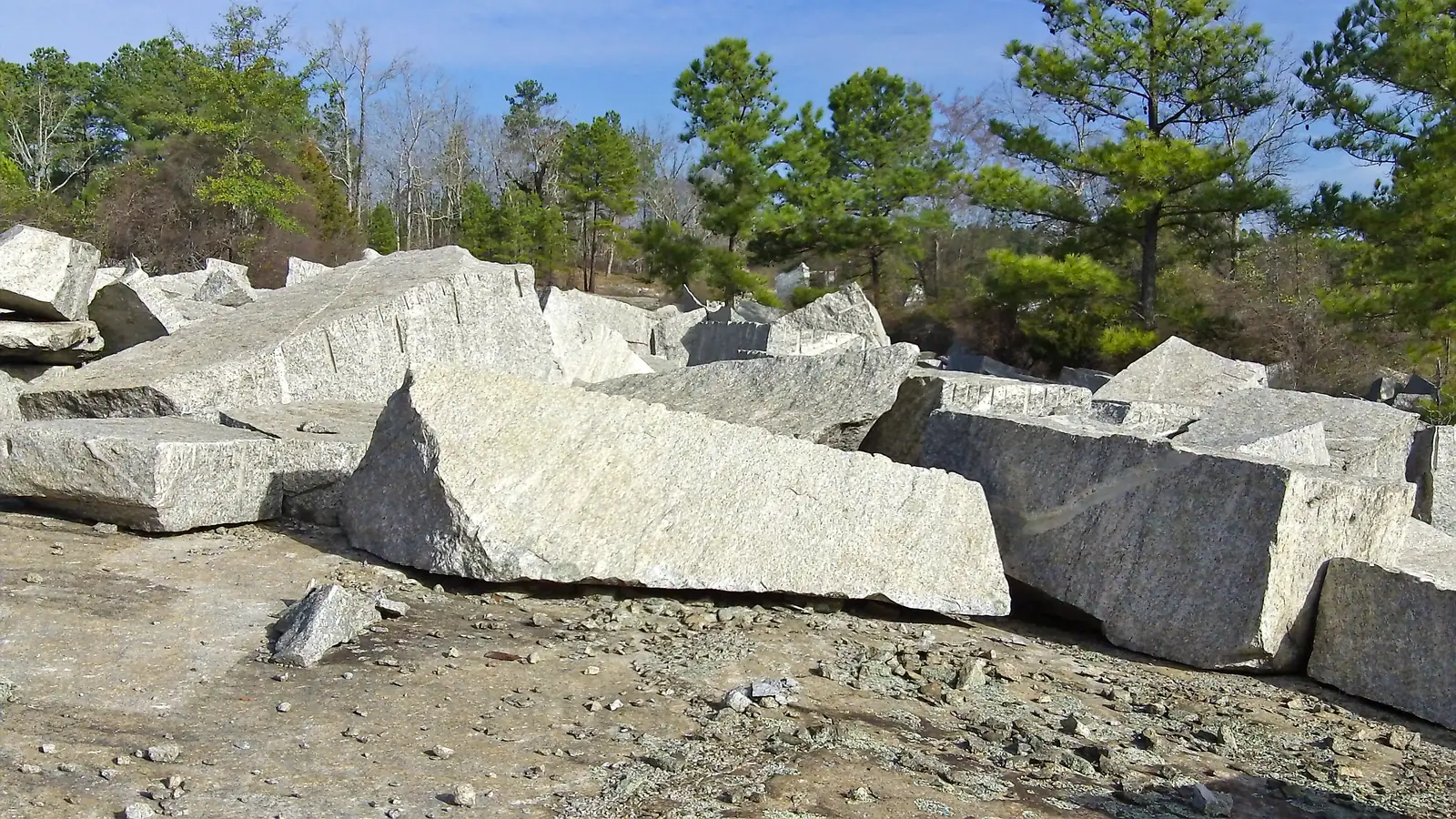
Stone is one of the densest export categories there is. Marble and granite run 2.6 to 2.9 tonnes per cubic metre, which means a 20GP filled on volume reaches or exceeds the road weight limit before the box is full.
So the constraint on stone is never internal space. It is fitting it in and still being legal on the road. Buyers are building-materials wholesalers, processing plants and project contractors, and the two classic losses are overweight and breakage.
1. The 20GP is the workhorse; weight bites before volume
A standard 20GP holds about 33 cubic metres. At 2.7 t/m³ that would be 89 tonnes, far beyond what the box or the highway allows.
Loading is therefore controlled by weight:
| Item | Figure |
|---|---|
| Internal volume | about 33 CBM |
| Theoretical fill at 2.7 t/m³ | about 89 tonnes (not achievable) |
| Normal operating limit | 20 to 22 tonnes gross per container |
| Actual ceiling | Carrier box condition plus US axle weight rules |
US gross axle weight limits are strict. Once the 20GP lands it moves on a chassis, and an overweight box gets stopped for unloading and splitting, with the cost and delay falling on the consignee.
For slabs and rough blocks, declare piece weight and total weight at booking so the carrier and the trucker can plan the load in advance.
2. Packing: vertical A-frames, never flat-stacked
The standard pack for slabs and cut-to-size boards is a vertical timber frame, A-frame or steel frame: boards stand on edge, foam or paper between them, and the frame is bolted and timber-braced into one rigid unit.
Flat stacking puts the entire weight of the upper layers on the bottom boards, and vibration at sea produces hairline cracks that only show up at cutting time — by which point it is too late.
| Packing point | Requirement |
|---|---|
| Frame timber | Must comply with ISPM 15, marked with IPPC or heat-treated |
| Frame base | Dunnage underneath for forklift access, and to keep boards off the container floor and away from moisture |
| Irregular, cylindrical or carved pieces | Custom timber crates with multi-point support |
3. Breakage and moisture: stone's two failure modes
Stone has high compressive strength but low flexural strength. Concentrate the load and it snaps.
- Support points must sit at the reinforced lower-middle area of the board face, not just under the two ends
- Fill voids with timber or air bags so the load cannot surge fore and aft
- Fit a bulkhead at the door end
In damp conditions some stone develops efflorescence, rust staining and water marks. Use moisture film and desiccant inside the pack, and avoid mixing with cargo that carries high moisture content.
If water marks are found on arrival, photograph and note them at collection, otherwise liability is almost impossible to establish.
4. US compliance and customs: codes, declared elements, tariffs
| Cargo | HTS heading |
|---|---|
| Marble and granite in raw form | 2515 / 2516 |
| Worked slabs and articles | 6802 |
Declared elements are material, dimensions, degree of surface working, and whether polished.
Weight and piece count must match the packing list — a weight declaration that does not match is the single most common trigger for a stone container examination.
US import requires ISF 10+2 filing in advance and a valid customs bond on the importer. Duty is the base rate plus whatever Section 301 list applies, handled under US customs clearance.
Where the stone is destined for a specific project, the buyer may require a radioactivity test or material certificate. Asking about end use early avoids the detour.
5. Door delivery: weight is the biggest variable
Stone needs three extra checks beyond general cargo.
| Variable | Detail |
|---|---|
| Truck payload | A 20-tonne container on a standard chassis needs an overweight permit in some states |
| Site equipment | Processing plants usually have a forklift; retail yards and residential projects often need a truck-mounted crane |
| Splitting | Overweight or access-restricted sites require the box to be broken down and delivered in parts |
Container DDP covers clearance, duty and trucking to the address, but unloading equipment and overweight permits must be allocated in the quote.
6. Loading records as claim evidence
Stone is a high-dispute category. Breakage and shade variation can both produce claims.
Photograph the board faces, the frames, the lashing and the void filling at loading, and attach a numbered list of every bundle with its specification. Check bundle by bundle against the numbers on arrival.
Complete photographs and lists let a dispute settle quickly on whether the failure was at loading, at sea or at unloading.
7. FAQ
How many tonnes fit in a 20GP? By volume it would take over 30 cubic metres, but weight bites first and the practical figure is 20 to 22 tonnes, depending on box condition and US axle rules. Do not estimate by volume; calculate by weight.
Why do slabs travel upright? Stone has low flexural strength. Flat stacking loads the bottom boards with everything above them and vibration at sea causes hairline cracks. Vertical A-frames with dunnage are the industry standard.
Will an overweight stone container be stopped in the US? Possibly. States enforce axle weight strictly, and an overweight box needs a permit or has to be split, with cost and delay falling on the consignee. Declare total weight at booking so the trucker can plan.
Does the timber frame need fumigation? Solid timber frames must meet ISPM 15 with IPPC marking or heat treatment. Plywood or laminated veneer avoids that step, but the load-bearing design has to be reworked.
Who unloads a door-delivered stone container? Door delivery means to the address at ground level, with unloading equipment supplied by the consignee. Processing plants usually have a forklift; retail yards and residential sites often need a crane, charged separately. State that in the quote.
8. About us
Harmony Shipping Service Limited (HSS) is headquartered in Dongguan with NVOCC registration, specialising in FCL shipping from China to USA on a DDP door-to-door basis. We load 20GP heavy cargo as routine, hold long-term space agreements with OOCL, Wan Hai and ZIM, and run our own US clearance and trucking, so weight and axle limits can be checked before booking.
For stone we will calculate the weight ceiling and the delivery conditions at quotation stage. For duty-included pricing see DDP shipping.
Send the cargo type (block, slab or cut-to-size), weight and dimensions per piece, and the delivery address and we will work out the weight ceiling and load plan before quoting.
- Phone / WhatsApp: +86 139 2684 9275
- Email: alan@hssddp.com
- Address: Room 9A-5002-5003, Huanyu Huijin Center, Nancheng, Dongguan, Guangdong, China
- Website: https://www.hssddp.com/en/