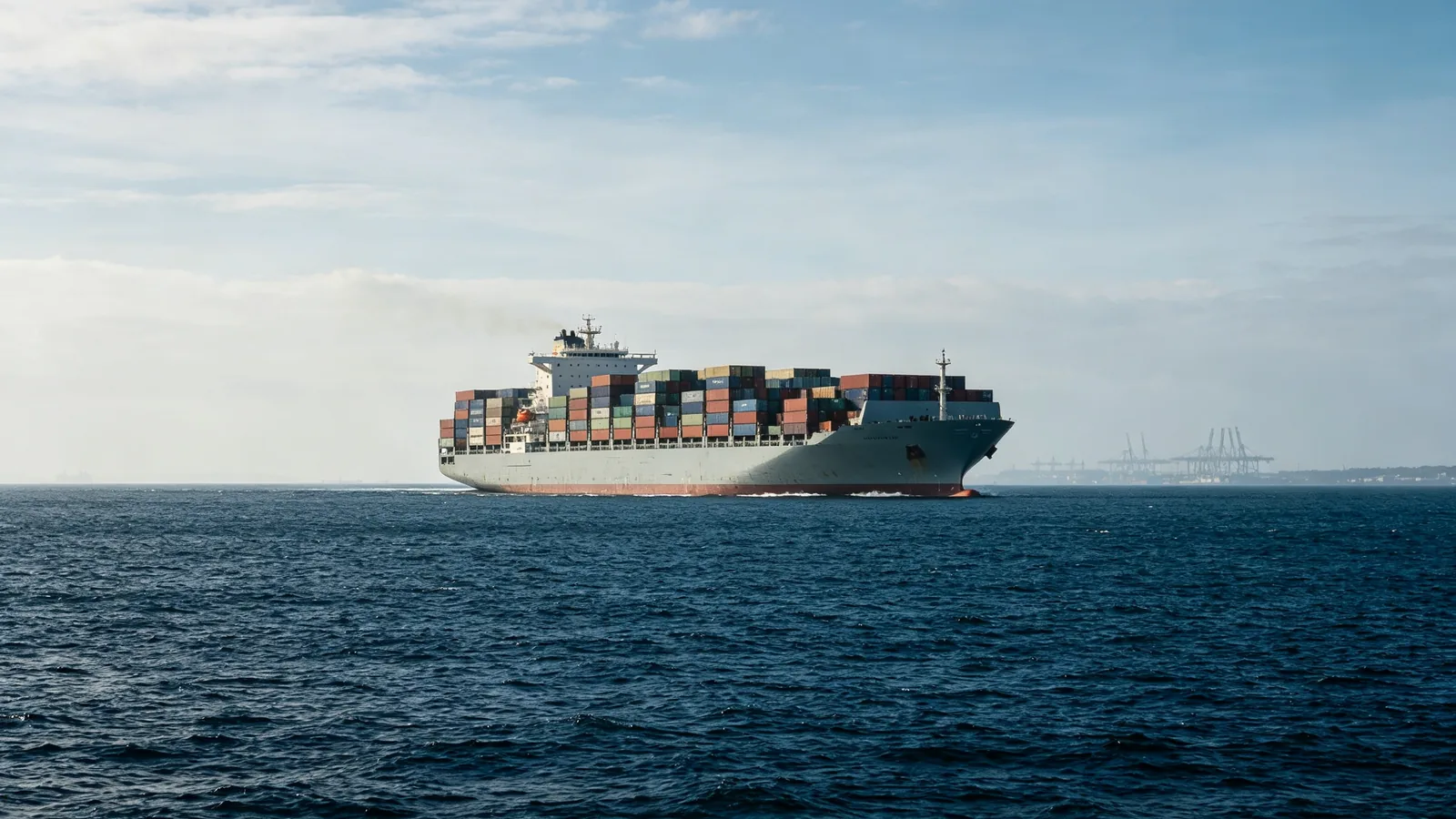
Foshan is one of China's largest sanitary ware clusters, but "sanitary ware" is not one product. It is four: ceramic fixtures, bathroom vanities, faucets and shower glass — each with its own weight profile and its own US compliance file.
This guide sticks to operations: which port to load from, which container to book, and which categories carry anti-dumping or certification risk.
The four sanitary ware types that decide your container
| Cargo | Main district | Behaviour | Container |
|---|---|---|---|
| Ceramic fixtures (toilets, basins) | Nanzhuang, Shiwan, Shishan | Heavy, fragile, large footprint | 20GP / 40GP |
| Bathroom vanities (incl. mirror cabinets) | Southern Nanhai, Shunde | Bulky, moisture-sensitive, contains wood | 40HQ |
| Faucets, shower sets | Shunde, Nanhai | High value, small, dense | Mixed filler |
| Shower enclosures, glass | Nanhai, Shishan | Tempered glass, shock-sensitive | 40HQ + racking |
The rule of thumb: fixtures go in a 20GP to stay under the weight limit; vanities and shower enclosures go in a 40HQ to use the volume; faucets fill the gaps. A great many Foshan factory loads mix all four in one box.
Choosing the load port: three routes
Foshan has no seaport. The sanitary ware belts sit in Nanhai and Chancheng, closest to Nansha.
| Route | Trucking time | Best for |
|---|---|---|
| Foshan → Nansha (Guangzhou) | 1–1.5 hours | Default for sanitary ware, dense USWC schedules |
| Foshan → Shekou / Yantian (Shenzhen) | 2–2.5 hours | US East Coast all-water, specific direct sailings |
| Foshan → river port barge (Sanshan, Shunde, Jiujiang) | 1–2 days | Large volumes, schedule-flexible cargo |
Practical notes:
- Nanzhuang, Shiwan and Shishan factories should default to Nansha. Same-day loading to port entry is realistic.
- US East Coast orders are steadier via Yantian direct sailings. The extra hour of trucking is usually worth it.
- Do not use barges to chase a sailing. Barge-to-terminal handover introduces variability and urgent orders miss the vessel.
- Peak season (September to December) queues heavily at Nansha. Book the pickup slot in advance.
Loading notes for each product type
Ceramic fixtures: breakage is the whole game
Toilets and basins are thin-wall ceramic. One hard shock in transit and the unit is scrap. Loading must deliver:
- Individual packing — foam corner protectors, pearl wool, five-layer corrugated carton
- No direct contact between units — cardboard or foam interleaving
- Timber pallets or dunnage on the floor — never load directly onto the container floor
- 20–30 cm buffer at the door end so nothing topples when the doors open
Fixture loads reach the weight limit in a 20GP. Do not force them into a 40HQ to save a container — an overweight box is rejected at the terminal.
Bathroom vanities: volume is the variable, wood is the compliance risk
Vanities are classic low-density cargo where a 40HQ pays for itself. They are also the highest-risk category in the Foshan sanitary ware mix, for three reasons:
- Solid wood components need ISPM-15 fumigation with the IPPC mark
- Panel construction must meet CARB ATCM Phase 2 / TSCA Title VI formaldehyde limits
- US anti-dumping and countervailing duties apply to Chinese wooden cabinets and vanities — see the compliance section below
Establish the AD/CVD position before you discuss price, not after.
Faucets: small cargo, hardest certification
Faucets and shower sets are compact and high value, usually loaded at the door end or used as filler. Their US certification threshold is the highest of the four:
- cUPC certification (Uniform Plumbing Code) — the practical gate in most states
- NSF/ANSI 61 lead-free compliance — mandatory for components in contact with drinking water
- WaterSense (EPA) — routinely written into contracts by large buyers
A faucet without cUPC effectively cannot enter mainstream US retail.
Shower glass: tempered, racked, never stacked flat
Tempered glass cannot take impact or torsion. It ships upright in an A-frame rack or timber crate, with paper interleaving between panels and the rack secured to the container. Never lay glass flat and stack it.
From Foshan factory to US delivery address
① Load at Foshan factory
     ↓ drayage 1–2.5 hours
② Nansha / Yantian / Shekou terminal
     ↓ export declaration + AMS and ISF filing
③ Ocean transit (USWC 12–15 days / USEC 30–35 days)
     ↓ arrival
④ US customs clearance and duty payment
     ↓
⑤ Container pickup → door delivery → empty return
Under DDP, everything after ④ — clearance, duty, delivery, empty return, detention exposure — sits with the forwarder. The factory's job ends when the box is loaded correctly.
The three US compliance traps for Foshan sanitary ware
This is where sanitary ware diverges from general Foshan cargo. The shipper absorbs the loss when these go wrong.
Trap 1: bathroom vanities carry AD/CVD
The US maintains anti-dumping and countervailing duty measures on wooden cabinets and vanities originating in China. Rates follow the current administrative review published by the US Department of Commerce.
The risk: ship vanities under a standard DDP quote, get assessed for AD/CVD at destination, and the gap becomes a dispute worth several times the freight.
What to do: verify current AD/CVD status against the HS code before booking, and state on the quote whether anti-dumping duty is included.
Trap 2: faucets without cUPC or NSF-61 cannot enter mainstream channels
cUPC is not a suggestion — it is the practical admission requirement under US plumbing codes. NSF/ANSI 61 governs materials in contact with drinking water, with lead leaching limits at its core.
In practice: Amazon, Home Depot and Lowe's ask suppliers for a cUPC certificate number. No number, no listing.
Trap 3: ceramic fixtures need cUPC, and often WaterSense
Toilets and basins also require cUPC. Commercial projects — hotels, apartments — add ADA accessibility dimension requirements.
WaterSense is a voluntary EPA programme, but large US buyers routinely turn it into a contractual requirement (toilets 1.28 gpf, faucets 1.5 gpm, showerheads 2.0 gpm).
Where the money goes in a DDP quote
Illustrative structure for a 40HQ mixed load (fixtures, vanities, hardware) to the US West Coast — not a rate.
| Item | Stage | In DDP scope |
|---|---|---|
| Foshan factory pickup and drayage | Origin | ✅ |
| Export declaration | Origin | ✅ |
| Ocean freight | Transit | ✅ |
| AMS / ISF filing | Transit | ✅ |
| Destination THC and documentation | Arrival | ✅ |
| US customs clearance | Arrival | ✅ |
| Duty, MPF, HMF | Arrival | ✅ |
| Container pickup and door delivery | Delivery | ✅ |
| Vanity AD/CVD | Arrival | ⚠️ Usually excluded |
| Customs examination fees | Arrival | ⚠️ Usually excluded |
| Detention and storage | Overrun | ⚠️ Usually excluded |
The point: AD/CVD, exam fees and detention are the three items most often missing from a low quote. Confirm each in writing.
Four mistakes that cost Foshan sanitary ware shippers money
1. Quoting vanities as ordinary furniture
See Trap 1. AD/CVD, once triggered, can exceed the entire freight cost.
2. Faucets certified only for the domestic market
China's 3C mark and water efficiency label apply inside China only. The US market reads cUPC plus NSF-61. The two systems do not translate.
3. Sizing a mixed load by the lightest cargo
Fixtures are dense. Choose a 40HQ because "vanities are bulky" and the fixtures will push the box overweight. Always size against the heaviest category.
4. Treating shower glass as general cargo
Tempered glass stacked flat without racking arrives with a very high breakage rate. Glass ships upright, in an A-frame.
FAQ
Which Foshan districts can you pick up from?
All of them — Chancheng, Nanhai, Shunde, Sanshui and Gaoming. The sanitary ware belts (Nanzhuang, Shiwan, Shishan, Shunde) are typically same-day load and same-day port entry.
How long does Foshan to USA take?
Counting from container loading: US West Coast (Los Angeles, Long Beach) 12–15 days at sea, roughly 18–22 days door to door. US East Coast (New York, Savannah) 30–35 days at sea, about 35–40 days door to door.
Under DDP, who pays anti-dumping duty on bathroom vanities?
DDP ordinarily means the seller bears import duty, but anti-dumping and countervailing duty are usually quoted separately. Confirm at quotation whether they sit inside the price or are billed at destination, and put it in the contract.
Can faucets ship before cUPC is complete?
They can ship, but they will not enter mainstream US channels without the certificate — large retailers and marketplaces require a number. Shipping to small distributors or off-retail channels can work with certification to follow. It depends on your buyer.
Can all four product types share one container?
Yes, and it is the most common Foshan sanitary ware pattern. Sequence it: confirm total weight first, heavy cargo at the nose, light cargo at the door, fixtures and glass vibration-protected, and separate compliance files per category.
What if the volume is under a full container?
Under 15 CBM, LCL is cheaper. Foshan has consolidation to both Nansha and Yantian, though transit runs 5–10 days slower. Above 15 CBM, FCL usually wins.
Confirm compliance before you compare rates
Foshan's difficulty is not transport, it is product compliance. Vanity AD/CVD, faucet cUPC and NSF-61, and fixture WaterSense are three separate gates — any one of them can stop a container at destination or keep a product off the shelf.
Send us the cargo type, HS code and destination port. We check those three risks first, then quote the FCL DDP plan.
For container types and sailing detail see FCL ocean freight; for clearance procedure and certification see US customs clearance. The neighbouring Zhongshan origin guide is here: Zhongshan to USA FCL DDP.
Call Linda on +86 151 1842 9977 with the product name, HS code and destination port for a compliance pre-check and a DDP quote on that specific cargo.